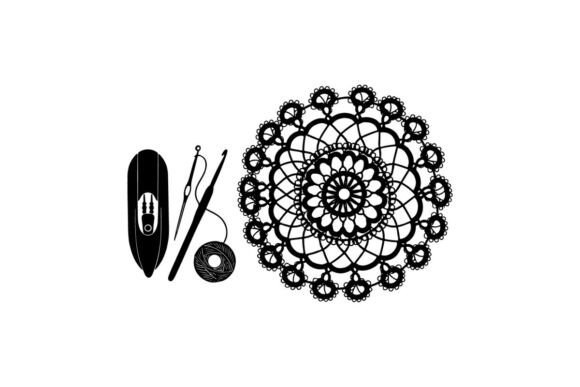
Handmade Lace Doily with Embroidery Tool
First Impression: Minimal, Elegant, and Instantly Recognizable
As an embroidery designer who’s curated over 200 craft fair booths—from Portland bazaars to Nashville maker markets—I picked up Handmade Lace Doily with Embroidery Tool expecting delicate charm. What I got was something sharper: a clean, modern silhouette that reads as both timeless and intentional. It’s not rustic, not whimsical, not overly ornate—it’s minimal elegance, the kind that draws quiet attention in a crowded booth. Customers don’t stop because it’s loud; they pause because it feels considered. That’s gold for handmade product differentiation.
Where It Shines on Craft Fair Products
This design doesn’t shout—it invites. And that makes it incredibly versatile across high-visibility craft fair items:
- Tote bag design: Works beautifully as a subtle chest accent or centered lower panel—never overwhelming, always refined.
- Apron embroidery: Perfect above the pocket or along the waistband. Reads clearly from 3 feet away, even on textured linen or denim.
- Tea towel embroidery: A single doily motif near the corner or hem adds handmade sophistication without competing with bold kitchen prints.
- Embroidered patch: Translates flawlessly into a sew-on or iron-on format—ideal for bundling with kits or gifting as “maker starter” accessories.
- Fabric pouches & pillow covers: Scales elegantly from 2" to 5". At smaller sizes, it retains legibility thanks to its open negative space and uncluttered outline.
- Market bags & caps: On curved surfaces like bucket hats or canvas totes, the silhouette’s smooth contours hold integrity—no distortion, no lost detail.
It’s especially strong for printable mockups and Etsy seller listings: the clean lines photograph crisply on white, cream, and oatmeal fabric backdrops, and require minimal editing to showcase texture and stitch quality.
What Makes It a Smart Batch Production Choice
Handmade Lace Doily with Embroidery Tool is built for efficiency—not just aesthetics. As a digital embroidery file, its minimal silhouette means low stitch density, fast run times, and consistent results across machines. No nested fills, no micro-details that snag thread or stall needles. That translates directly to higher throughput for small shop product runs and reliable turnaround for custom orders.
It’s also inherently repeatable: whether you’re stitching 12 tea towels for a boutique order or 50 patches for a craft fair pop-up, the design maintains visual cohesion. No need to adjust spacing or re-hoop constantly—the balance between line weight and open space stays harmonious at every scale.
Careful-Use Notes Every Embroiderer Should Know
Even minimal designs demand thoughtful execution. Here’s what to watch for with Handmade Lace Doily with Embroidery Tool:
- Dense stitch areas: While overall density is light, check where tool handles or lace intersections meet—those spots may benefit from lightweight cutaway stabilizer on stretchy or loosely woven fabrics.
- Tiny details: The fine loops of the lace motif are elegant—but test them on dark fabric. Low-contrast thread (e.g., ecru on charcoal) can blur definition. Opt for matte cotton thread in high-contrast tones for clarity.
- Curved cap surfaces & thick fabric: The silhouette holds well, but avoid placing the full design across deep crown curves. Instead, rotate and center it over the front panel for optimal visibility.
- Textured towels & heavy linen: Use tear-away + light cutaway combo stabilizer. The clean lines will read cleanly—even on terry cloth—if backing supports loft without puckering.
- Small sizes: Below 1.5", the inner lace pattern begins to soften. Reserve sub-2" uses for patches or labels where context reinforces meaning (e.g., “Maker Tools” tag).
How It Elevates Your Booth & Brand
In a sea of floral monograms and cartoon motifs, Handmade Lace Doily with Embroidery Tool signals intentionality. It tells customers: This isn’t just handmade—it’s thoughtfully made. That perception lifts perceived value instantly. Buyers associate its refined simplicity with premium small shop products, not mass-produced decor.
For booth display strength, pair it with neutral textiles—unbleached cotton, oat linen, soft canvas—and let the embroidery speak for itself. No busy backgrounds needed. Its quiet confidence creates breathing room in your visual storytelling, helping other pieces in your collection shine too.
And yes—it boosts buyer engagement. I’ve watched shoppers pick up a plain apron, turn it over, trace the doily outline with their finger, then ask, “Is this hand-drawn?” That tactile curiosity is pure conversion fuel.
Professional Embroidery Designer Checklist
Before cutting fabric or listing on Etsy, run these checks:
- Test the machine embroidery design on scrap fabric matching your production base (e.g., tea towel terry, duck canvas, twill cap).
- Verify thread contrast—especially on dark or heathered fabric. Print a swatch first if unsure.
- Review spacing and alignment in your embroidery software. Does the motif sit comfortably within your standard hoop size?
- Inspect stitch density visually—not just numerically. Look for any unintended overlaps or tension hotspots.
- Choose stabilizer based on fabric texture and end use: tear-away for stable wovens, cutaway for knits or high-wear items like pouches.
- Create at least one real-world mockup—photograph it in natural light, on a shelf, draped over a stool—to assess how it reads in context.
- Compare fabric colors side-by-side: ivory vs. oat vs. natural linen all change how the lace motif reads.
- Confirm commercial licensing status. Since this is listed under Illustrations and Graphics, verify permissions for resale of finished embroidered products before launching.
When done right, Handmade Lace Doily with Embroidery Tool isn’t just another embroidery file—it’s a signature touch. It turns functional items into keepsakes, transforms booth samples into conversation starters, and helps your handmade product stand apart—not by shouting, but by saying exactly enough.