Cute Deer Embroidery Hoop Line Art
First Impression: Sweet, Whimsical & Instantly Recognizable
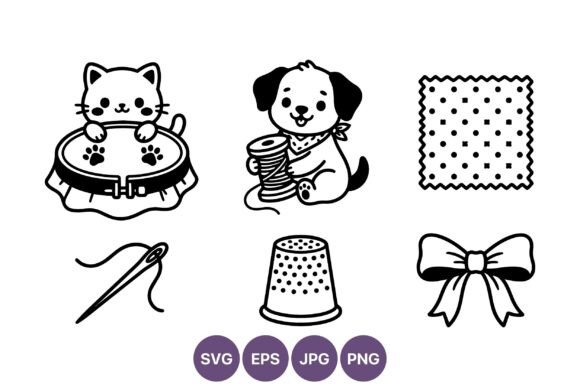
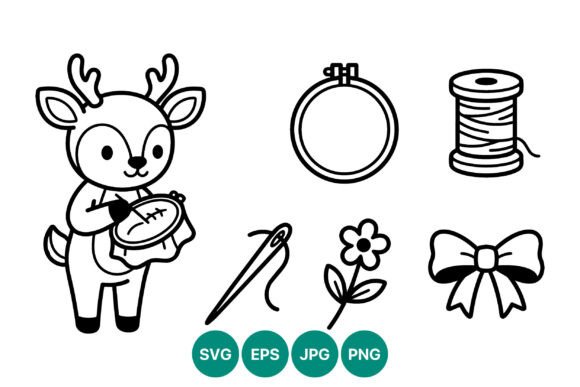
As an embroidery designer who’s curated over 200 craft fair booths and shipped thousands of handmade products, my first thought when I saw Cute Deer Embroidery Hoop Line Art was: “This stops people mid-aisle.” It’s not loud or aggressive — it’s soft-minimal with a gentle charm. The black-and-white line art style reads as modern-farmhouse meets cozy handmade, and the deer stitching *within* an embroidery hoop adds clever self-referential storytelling. That subtle meta touch? It resonates deeply with fellow makers, Etsy sellers, and customers who value intention behind design. No clutter, no noise — just clean vector simplicity that feels premium without trying too hard.
Where It Shines: Craft Fair & Handmade Market Realities
In my booth setup — think linen aprons, canvas tote bags, stoneware-matched tea towels, and embroidered patches pinned to burlap banners — Cute Deer Embroidery Hoop Line Art performs strongest where cuteness meets utility:
- Tote bag design: Centered on a natural canvas tote, it reads clearly from 6 feet away. The line weight holds up beautifully at 4–5" wide — ideal for shoulder-height display.
- Apron embroidery: Placed just above the pocket, it adds personality without overwhelming the garment’s function. Customers consistently point and say, “That’s *me*.”
- Tea towel embroidery: Works flawlessly on medium-weight cotton or linen blends. The open-line structure avoids heavy stitch density, so it dries fast and won’t stiffen the fabric.
- Embroidered patch: At 2.5–3", it’s sharp, scalable, and perfect for iron-on or sew-on applications on denim jackets, caps, or market bags.
- Pillow covers & small pouches: Scales down gracefully — unlike dense fill designs, this line art retains legibility even at 1.75". That’s critical for batch-producing small shop products.
What Makes It Sell Online & In-Person
Cute Deer Embroidery Hoop Line Art is built for discoverability. As a digital embroidery file, its clean vector foundation (SVG, EPS) means crisp printable mockups for Etsy listings — no pixelation, no guesswork. Photographs pop on light and mid-tone fabrics, and the high-contrast black-on-white translates reliably across screen sizes. For an Etsy seller or small shop product creator, that consistency cuts editing time and boosts conversion. Plus, its theme is evergreen: not tied to holidays or trends, so it supports year-round inventory without seasonal repositioning.
Practical Production Notes Every Embroiderer Should Know
This isn’t a “load-and-go” machine embroidery design — but it *is* forgiving, if you respect its structure. Here’s what I test before cutting a single thread:
- Stabilizer matters: Use medium-weight tear-away for smooth fabrics (cotton, linen), and cut-away for knits or textured tea towels. The line art has delicate curves — insufficient stabilization causes wobble in the deer’s antlers or bow loop.
- Fabric texture affects clarity: On terry cloth or heavy jacquard, reduce size slightly (by ~10%) or simplify the bow outline manually. Tiny details — like the needle’s eye or thread loop — can vanish on nubby surfaces.
- Thread colors enhance, not distract: Stick to matte black or deep charcoal for contrast. Avoid glossy or metallic threads unless testing first — they exaggerate thin lines and may blur the “stitching” illusion.
- Hoop size alignment: Confirm your commercial embroidery software places the design within standard 4x4 or 5x7 hoop boundaries. The composition is balanced, but always verify spacing before digitizing.
- Dark fabric warning: If embroidering on navy, charcoal, or black fabric, switch to white or ecru thread — and run a physical sample. Some line weights disappear under low-light booth lighting.
Booth Impact & Customer Connection
In a crowded craft fair, Cute Deer Embroidery Hoop Line Art builds instant rapport. It’s friendly, skilled, and quietly confident — mirroring how handmade buyers want to feel about the maker behind the table. When I hang a finished apron sample beside a stitched tea towel and a set of embroidered patches, customers linger. They smile. They ask, “Did you draw that?” That emotional hook drives impulse buys and repeat visits. It also strengthens brand consistency: whether you’re selling on Etsy, at local boutiques, or via Instagram, this design becomes a recognizable signature — especially when paired with complementary botanical or stitching-themed graphics from the same Illustrations category.
Final Designer Advice Before You Produce
Before turning Cute Deer Embroidery Hoop Line Art into a craft fair product or commercial embroidery offering:
- Test it on scrap fabric *in your actual machine*, using your go-to thread and stabilizer combo.
- Check stitch density visually — though it’s line art, overlapping loops (like the bow or thread curl) can create unintentional fill zones.
- Create one real-life mockup — not digital — and photograph it in natural light *and* under warm booth lighting.
- Compare how it reads on light vs. dark fabric swatches side-by-side.
- Verify commercial licensing terms included in the ZIP folder — especially if selling finished products (not just the digital embroidery file).
This design doesn’t need gimmicks. Its strength is in quiet authenticity — the kind that makes customers pause, connect, and reach for their wallet. Whether you’re an embroidery business owner scaling production or a solo maker prepping for your first handmade market, Cute Deer Embroidery Hoop Line Art earns its spot in your core design assets. Just remember: great line art is only as strong as the care behind its execution.