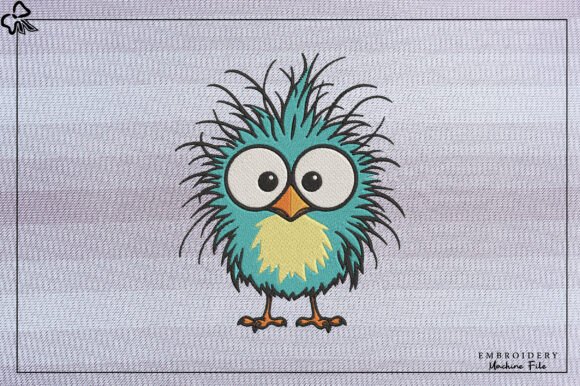
Cute Fluffy Owl Embroidery Design
First Impression: Playful, Approachable, and Instantly Memorable
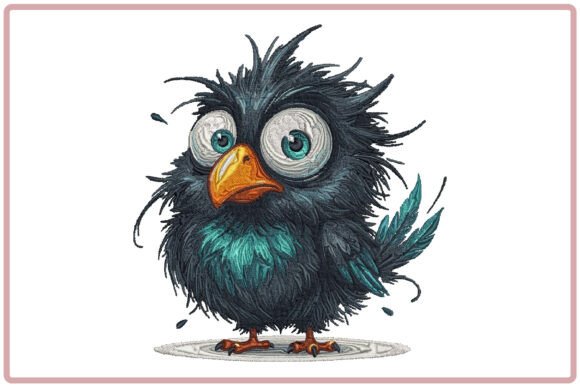
As an embroidery designer who’s developed hundreds of commercial designs for small businesses—from neighborhood bakeries to indie pet brands—I opened the Cute Fluffy Owl Embroidery Design file expecting charm, and it delivered. The “Messy Hair Bird Pattern” descriptor isn’t just marketing fluff—it signals intentional imperfection: soft edges, uneven feather clusters, and a whimsical asymmetry that reads as handmade, not mass-produced. That’s gold for small business merch. It feels friendly without being childish, bold without shouting, and warm without sacrificing polish. For a café owner stitching owl patches onto barista aprons or a florist adding it to reusable tote bags, this design lands as authentically human—not stock, not sterile, and definitely not generic.
Real-World Business Use: Where This Owl Truly Shines
The Cute Fluffy Owl Embroidery Design excels where personality meets practicality. As an embroidered patch on denim jackets or canvas tote bags, its rounded silhouette and expressive face hold up beautifully—even at 2.5"–3.5" widths. On staff uniforms (think café aprons or boutique smocks), it reads clearly from across a room thanks to strong negative space around the head and defined wing contours. For cap embroidery, I recommend placing it on the back strap or side panel rather than the front crown—its playful scale and organic shape thrive in relaxed placements where rigid symmetry isn’t expected.
It also works surprisingly well as a subtle sleeve detail on work shirts or as a branded accent on product packaging—say, stitched onto kraft paper gift tags or linen drawstring bags for a handmade soap brand. Etsy sellers will appreciate how easily it integrates into printable mockups: pair it with earthy thread colors (moss green, oatmeal beige, charcoal grey) and it reads artisanal; switch to cobalt blue and crisp white threads, and it pops on modern apparel lines. As part of a broader set of design assets, the Cute Fluffy Owl Embroidery Design adds visual warmth without clashing with clean typography or minimalist branding.
Where to Proceed With Care
Like any expressive machine embroidery design, the Cute Fluffy Owl Embroidery Design has sweet spots—and boundaries. Avoid shrinking it below 1.75" for embroidered patches: those fluffy “messy hair” details begin to blur, losing their signature charm and risking stitch crowding. On curved surfaces like cap fronts or tapered tote bag corners, test stitch density first—the design’s moderate fill areas may require slight underlay adjustment to prevent puckering on stretchy or textured fabric.
Dark uniforms? Absolutely viable—but only with high-contrast thread colors. A light tan owl on navy twill won’t read without careful thread selection (cream or off-white works better than stark white). And while its stitch density feels balanced overall, avoid pairing it with ultra-fine fabrics like silk or lightweight rayon without robust stabilizer backing—those soft feather layers need support to maintain shape through repeated washing.
Brand Identity Impact: More Than Just Cute
Small business owners often underestimate how much a single embroidered element shapes customer perception. The Cute Fluffy Owl Embroidery Design doesn’t just decorate—it communicates. Its lighthearted energy builds approachability for service-based brands (a pet-sitting business, a children’s bookshop, a wellness studio). Its handmade aesthetic reinforces authenticity for craft-focused sellers—no stock vector vibes here. When customers see it consistently across aprons, tote bags, and thank-you cards, recognition grows. Trust follows: consistent, well-executed embroidery signals attention to detail and investment in quality.
Crucially, it elevates perceived product value. A $28 linen tote bag with this owl stitched cleanly near the handle feels more intentional—and more worth the price—than one with a printed logo. That subtle premium lift matters most for handmade product lines where margins are tight but differentiation is essential.
Practical Designer Notes Before You Stitch
- Always test in black and white first—this reveals contrast issues and hidden density traps before thread is loaded.
- Verify small-patch viability: resize to your target dimensions (e.g., 2" wide) and check if eyes, beak, and hair texture remain legible in your embroidery software.
- Review thread color contrast on your actual base fabric—not just on screen. What looks vibrant on monitor may mute on heather grey cotton.
- Inspect spacing between elements: ensure no floating stitches or tight gaps between feathers that could snag during wear or washing.
- Confirm hoop size compatibility with your commercial or home machine—some versions may push standard 4x4" limits.
- Test on real fabric with proper stabilizer: use cutaway for knits, tear-away for stable wovens, and consider topping for napped textures.
- Create a physical mockup before client approval—a photo of the stitched design on actual tote fabric beats any digital proof.
- Compare it beside your other design assets: does it harmonize with your logo, typography, and color palette—or does it visually compete?
- Confirm commercial licensing before using the Cute Fluffy Owl Embroidery Design for resale items, staff uniforms, or third-party products. If not explicitly stated, contact the seller—never assume.
Final Thought: A Strategic Asset, Not Just a Design
The Cute Fluffy Owl Embroidery Design stands out because it balances emotional resonance with technical readiness. It’s not just another bird-themed embroidery file—it’s a versatile, scalable, brand-building tool built for real small business needs. Whether you’re launching your first line of custom apparel, refreshing staff uniforms, or creating memorable customer gifts, this design delivers warmth, consistency, and quiet professionalism. Used intentionally—with attention to fabric, thread, and context—it becomes more than decoration. It becomes part of your story.