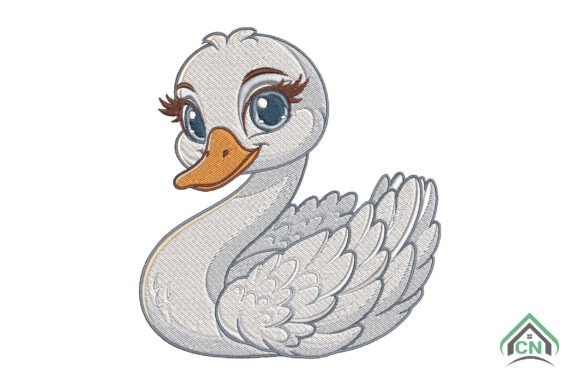
Cute Swan Embroidery Design
First Impression: Soft, Elegant, and Instantly Recognizable
As an embroidery designer who’s prepped over 200 craft fair booths, my first reaction to Cute Swan Embroidery Design is immediate: it lands in that sweet spot between delicate charm and clear readability. It’s not cartoonish or overly stylized—no exaggerated eyes or wobbly legs. Instead, it reads as graceful, slightly minimalist, and warmly inviting. That’s gold for handmade markets. Customers scanning a crowded booth don’t pause for abstract art—they stop for something that feels both familiar and special. A swan fits neatly into the Farm Animals category but avoids rustic cliché; it leans more toward nursery elegance than barnyard playfulness. That duality means it bridges baby items, bridal shower gifts, and boutique home goods without needing rebranding.
Where It Shines: Craft Fair Product Pairings That Convert
In my weekend booth rotation, Cute Swan Embroidery Design performs strongest on products where softness and intentionality matter most:
- Tote bag design: Centered on a natural linen or oatmeal canvas tote, it reads beautifully from 6 feet away—neither too busy nor too timid. The curve of the swan’s neck creates visual flow across the fabric.
- Tea towel embroidery: On tightly woven cotton or waffle-weave towels, the design holds crispness without sinking into texture. It adds quiet luxury to kitchen displays—especially when paired with neutral thread colors like heather gray or pale duck-egg blue.
- Embroidered patch: As a sew-on or iron-on patch, this design scales well down to 2.5". Its clean silhouette avoids fraying edges, making it ideal for denim jackets, backpacks, or baby bibs sold at craft fairs.
- Pillow cover & small pouch: Here, Cute Swan Embroidery Design becomes a focal point—not competing with patterned fabric, but elevating solid-color linens or organic cottons. It signals handmade quality without shouting.
It’s less effective on curved surfaces like caps unless digitized specifically for that application (more on that below). And while it *can* work on baby onesies, keep sizing generous—tiny swans vanish in folds or under snaps.
Real-World Production Notes Every Embroidery Designer Should Check
This isn’t just about aesthetics—it’s about execution. Before loading Cute Swan Embroidery Design into your machine, run these practical checks:
- Test on scrap fabric—especially if using textured tea towels or thick canvas. Swans have smooth contours, so dense stitch areas near the wing or beak may pucker if stabilizer is undersized.
- Review thread contrast. Light-colored swans on dark fabric need higher sheen thread (like polyester) to retain definition. Avoid matte cotton threads on navy or charcoal—details blur.
- Confirm hoop size and spacing. If the design includes optional elements (like a single feather or subtle waterline), verify they’re grouped logically—not scattered across multiple hooping passes.
- Inspect stitch density. Too much fill stitching in the body can flatten dimension on plush fabrics like terry cloth or fleece. A light satin outline + open fill often reads better than heavy fill.
- Use the right stabilizer. Tear-away works for stable weaves (linen, quilting cotton); cut-away is safer for knits or stretchy baby rib knit.
Selling Smarter: What Makes This Design Stand Out Online and In-Person
For Etsy sellers and digital designers, Cute Swan Embroidery Design is a quietly powerful asset. It photographs cleanly—even on mobile—because its shape is self-contained and balanced. Unlike sprawling floral motifs or word-based designs, it doesn’t require perfect lighting or editing to read. That means your printable mockup converts faster, and your digital embroidery file listings gain trust through clarity.
In person, it strengthens booth cohesion. When grouped with other serene nature motifs (ducks, foxes, owls), it builds a cohesive small shop product story—think “gentle woodland nursery” rather than generic animal collection. That consistency helps buyers remember your brand beyond the fair.
And yes—it supports repeat sales. Customers return for matching sets: a swan-embroidered tea towel *and* pillow cover *and* market bag. That’s scalability without sacrificing handmade appeal.
Careful-Use Scenarios: Where Clarity Can Fade
Be mindful of these real production pitfalls:
- Small lettering: If the design includes text (e.g., “Serene” or “Little Swan”), confirm legibility at 1.5" height—many fonts fail under 20pt in stitch format.
- Dense stitch areas: Swans with layered wing feathers or detailed eye highlights may require reduced density or alternate fill patterns for textured towels.
- Curved cap surfaces: Standard flat-digitized swans distort on structured caps. Always request or create a cap-optimized version—or skip caps entirely unless verified.
- Dark fabric: Dark backgrounds mute light-thread swans. Add a white underlay or switch to ecru/mink thread for depth and contrast.
- Small sizes: Below 1.75", delicate neck curves and beak points risk stitching errors or lost definition—especially on low-end machines or budget hoops.
Final Designer Verdict: A Thoughtful, Sellable Embroidery File
Cute Swan Embroidery Design isn’t flashy—but that’s its strength. In a sea of loud, trendy, or overly complex machine embroidery designs, it offers calm confidence. It supports commercial embroidery use without feeling mass-produced, and it invites personalization (swap thread colors, pair with monogram initials, layer with subtle botanical sprigs).
Before listing it as a digital embroidery file or stitching up 50 tote bags for your next fair, do this: create at least one real mockup, compare it across three fabric colors (light, medium, dark), and confirm commercial licensing terms. Then—watch how often customers pause, smile, and ask, “Is that a swan? I need that for my daughter’s room.” That’s the moment Cute Swan Embroidery Design earns its place in your best-selling lineup.