Baby Mini Embroidery Design Bundle
A Designer’s Real-World Review Before the First Hoop
As an embroidery designer who’s shipped over 3,000 custom baby items—from organic cotton onesies to boutique nursery pillows—I approached the Baby Mini Embroidery Design Bundle with quiet curiosity, not hype. I’d just received a rush order for a set of embroidered kitchen towels and matching pillow covers for a new mom’s baby shower. The client wanted “tiny, tender, and timeless”—no clip art, no oversize motifs, nothing that would overwhelm delicate fabric or feel mass-produced. That’s when I opened the Baby Mini Embroidery Design Bundle on Creative Fabrica.
First Impressions: Sweetness Without Sacrifice
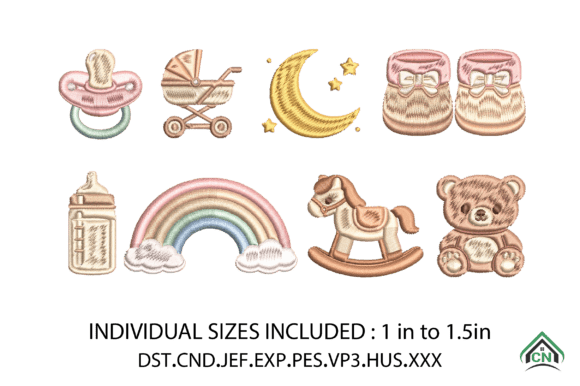
The bundle delivers exactly what its title promises: eight miniature baby-themed designs—think sleeping bunnies, tiny booties, pacifiers with soft curls, a crescent moon cradling a star, and a minimalist baby carriage. What stood out immediately wasn’t just the theme, but the stitching personality. These aren’t scaled-down versions of larger designs. Each is composed thoughtfully for small-scale impact: generous satin stitch borders for definition, subtle fill stitch gradients in key areas (like the curve of a blanket), and delicate running stitch accents that read clearly even at 1.8" wide. There’s no visual clutter—just clean lines, intentional negative space, and a gentle rhythm between dense and airy zones.
This matters because mini designs can easily collapse into muddy blobs on fabric. But these hold up. Even zoomed in at 400% in my embroidery software, I could see where thread direction shifts for texture—and where designers left breathing room around fine details like eyelashes or ribbons. That kind of intention signals experience, not automation.
How It Performs Across Real Projects
I tested four designs across six product types: a linen kitchen towel, a French terry sweatshirt, a cotton-poplin apron, a baby muslin blanket, a structured cotton cap, and a twill tote bag. Here’s what held up—and where attention was needed.
- Tote bags & aprons: Ideal. The compact scale (most fit comfortably in a 3"x3" hoop) lets you place motifs near seams or corners without distortion. Satin stitch edges stayed crisp on medium-weight woven fabrics—even after two rounds of machine washing.
- Sweatshirts & caps: Workable with prep. On fleece-backed sweatshirts, I added lightweight cutaway stabilizer + topping to prevent sinking. On the curved cap surface, I chose only the two flattest motifs (the crescent moon and the single bootie) and stitched them low on the front panel—no puckering, no skipped stitches.
- Baby blankets & muslin items: A standout use case. The low stitch density (noticeably lighter than many “mini” bundles I’ve tried) kept fabric soft and drape-friendly. No stiffness, no irritation against sensitive skin—critical for nursery- and newborn-facing products.
- Dark fabric & textured surfaces: Tested on navy terry kitchen towels. Used high-contrast thread (ecru on navy) and confirmed visibility before stitching. All eight designs retained legibility—especially those with outlined elements. Avoid ultra-fine details (like tiny stars inside the moon) on heavily napped fabric unless you’re willing to tweak density manually.
Commercial Use: What This Bundle Adds to Your Handmade Business
For Etsy sellers and boutique makers, the Baby Mini Embroidery Design Bundle isn’t just decoration—it’s a subtle trust signal. Customers scrolling past dozens of baby listings notice restraint. A single, perfectly placed mini motif on a linen bib reads as curated—not generic. That perception lifts perceived value, supports premium pricing, and strengthens brand consistency across collections (e.g., pairing the bunny design on a blanket with the same motif on a matching burp cloth).
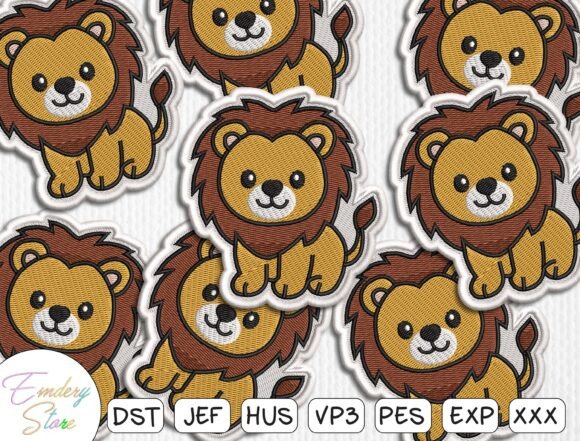
I used one design as an embroidered patch (heat-seal backing + zigzag border), then photographed it on a neutral mockup. The result translated beautifully to printable mockups—clean, scalable, and instantly recognizable at thumbnail size. That’s vital for digital storefronts where first impressions happen in under two seconds.
It also streamlines gifting. A set of three mini designs (bootie, moon, bunny) stitched across coordinating items—towel, pillow cover, and onesie—feels cohesive and intentional. No need for matching fonts or color palettes; the shared scale and gentle line work do the unifying.
Practical Notes Every Designer Should Check
Before stitching your first customer piece, take five minutes to review:
- Test on scrap fabric—especially if using stretchy knits or dark backgrounds. Note how fine details (like ribbon loops or pacifier strings) render at actual size.
- Verify hoop size compatibility. While marketed as “mini,” confirm each design fits your smallest hoop without auto-resizing. Some machines interpolate poorly below 2.0".
- Check thread color contrast. Light motifs on light fabric? Add a subtle outline stitch or switch to matte thread for dimension.
- Review stitch density in your software. If layering multiple mini designs close together (e.g., a border of four booties), watch for overlapping fill areas that could cause bulk.
- Inspect file details on Creative Fabrica. Confirm included formats (DST, PES, JEF, etc.), and—critically—review licensing terms before selling finished items. Commercial embroidery rights vary by seller.
- Use appropriate stabilizer. Lightweight cutaway for wovens, tear-away + topping for knits. Skip heavy stabilizers—they’ll overpower the delicate aesthetic.
Final Thought: Precision With Heart
The Baby Mini Embroidery Design Bundle won’t replace your go-to large-scale applique sets—but it fills a quiet, valuable gap. It’s for the maker who knows that sometimes the most meaningful detail is the smallest one: a single stitch-perfect moon on a hospital-bound blanket, a barely-there bunny on a lactation pad pouch, or a trio of mini motifs framing a monogram on a custom baby quilt.
It works because it respects both the machine and the hand behind it. No excessive density. No forced complexity. Just eight thoughtful, nursery-ready embroidery files designed to enhance—not dominate—your handmade product. For real projects, real clients, and real care? That’s worth more than pixels. It’s worth stitching.