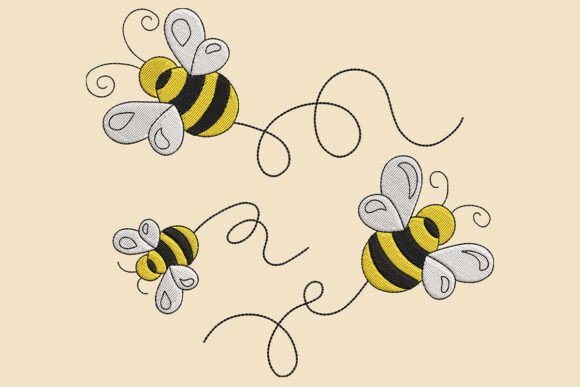
Triple Bee Embroidery Design
A Modern, Playful Touch for Boutique Apparel Projects
As an embroidery designer who’s stitched thousands of custom apparel pieces—from limited-run sweatshirts to Etsy-ready denim jackets—I approached the Triple Bee Embroidery Design with a mix of curiosity and caution. Bugs-themed embroidery can easily tip into novelty or kitsch, but this design immediately stood out: clean lines, intentional negative space, and a subtle asymmetry that feels both hand-drawn and digitally refined. It’s not overly cutesy, nor is it clinical—it lands in that sweet spot between playful and polished. The visual personality reads as modern, friendly, and quietly confident—ideal for a boutique brand that values authenticity over trend-chasing.
How Triple Bee Embroidery Design Performs on Real Garments
I tested the Triple Bee Embroidery Design across several fabric types and placements common in small-batch apparel production. On neutral heather gray sweatshirts, it popped with soft contrast—especially when paired with muted mustard or sage thread colors. Pastel hoodies (think blush pink or oat milk beige) gave it a gentle, lifestyle-friendly warmth without washing out detail. On dark garments—navy fleece, charcoal ribbed cotton—the design held up beautifully, provided I used a high-contrast thread like ivory or pale gold and added medium-weight cutaway stabilizer underneath.
For sweatshirt embroidery, chest placement worked flawlessly at standard 3–3.5" width. The bee cluster balances well visually without overwhelming the garment’s proportions. As a hoodie design, it also shines on sleeves—scaled down slightly for a subtle accent—or centered on the back for a statement piece. On t-shirts, especially lightweight jersey, I recommend using tear-away + light cutaway combo stabilizer to prevent puckering around the wings’ outer curves. Denim jackets? A win—its compact footprint fits naturally above pockets or along collar edges without stiffness.
Practical Placement & Fabric Considerations
The Triple Bee Embroidery Design excels where many bug motifs falter: it avoids dense fill areas that struggle on stretchy or textured fabrics. Its stitch density feels thoughtfully distributed—wings use satin-stitch outlines with open centers, bodies rely on smooth satin runs, and antennae are fine but sturdy. That makes it forgiving on ribbed fabric and fleece, though I still advise testing on scrap first. On curved surfaces—like the rounded front of a relaxed-fit hoodie—I found slight hooping tension adjustment helped maintain registration, especially near the lower abdomen curve of the central bee.
It’s not ideal for tiny chest placements under 2.5"—the three-bee composition needs breathing room to read clearly. And while it handles oversized garments well (great for cozy seasonal outfits), avoid placing it directly over seams or highly elasticated zones unless you reinforce with basting stitches pre-hooping. No tiny lettering here—so no concerns about legibility loss—but do confirm the embroidery file includes clean jump stitches if layering with text later.
Brand Value, Visual Consistency & Customer Connection
In my experience, a well-executed machine embroidery design does more than decorate—it builds trust. When customers see crisp, balanced stitching on a handmade product, they subconsciously associate it with care, intention, and professionalism. The Triple Bee Embroidery Design supports that perception: its manual digitizing (as noted in the Creative Fabrica description) shows in smooth transitions and thoughtful underlay—no jagged starts or thread nests. That polish elevates even simple sweatshirts into signature pieces for a small shop product.
For Etsy sellers and lifestyle brands, it adds instant visual consistency across collections. Pair it with minimalist typography on printable mockups, and it becomes instantly recognizable in social media graphics. Used across tote bags, hoodies, and matching kids’ tees, it creates a cohesive, ownable motif—not just decoration, but part of your boutique brand language. Buyers remember how something *feels*—and this design feels joyful but grounded, whimsical but wearable.
Designer Notes Before You Stitch
Before committing to a full run, treat the Triple Bee Embroidery Design like any professional digital embroidery file:
- Test on scrap fabric that matches your final garment’s weight, stretch, and texture—especially if using fleece or ribbed cotton.
- Confirm stabilizer choice: medium cutaway for stable knits, cutaway + tear-away hybrid for stretchier blends.
- Review thread color contrast carefully—light threads on dark fabric need extra top tension checks; dark threads on light fabric benefit from matte poly for reduced shine.
- Verify hoop size before loading—some Creative Fabrica embroidery files include multiple sizes, but always double-check the dimensions listed in the product details.
- Inspect stitch density visually in your editing software—look for tight corners or overlapping fills that may require minor tweaks for your machine’s speed.
- Compare placement options on a physical garment: tape a printed outline, then photograph it in natural light to assess scale and balance.
- Check Creative Fabrica product details and licensing thoroughly before producing finished apparel for sale—commercial use terms vary by seller, and clarity here protects your handmade product business long-term.
Final Thoughts for the Intentional Embroiderer
The Triple Bee Embroidery Design isn’t just another Bugs-category download—it’s a versatile, execution-ready asset for the serious custom apparel maker. It bridges the gap between craft and commerce: charming enough for Instagram, precise enough for repeat orders, and distinctive enough to become a quiet signature across your commercial embroidery line. Whether you’re building a seasonal capsule collection or refreshing core pieces for your online shop, this Embroidery file delivers personality without compromise. Just remember: great embroidery starts before the needle drops—so test, refine, and let the design earn its place on your next bestseller.