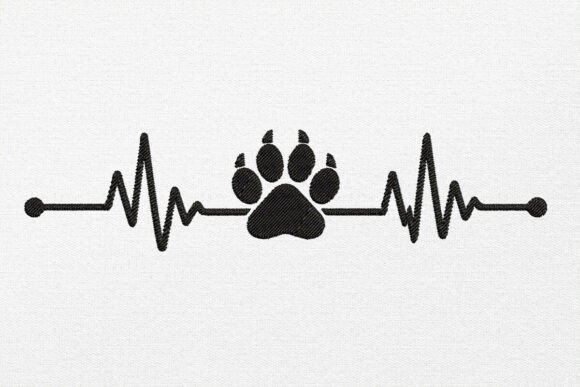
Heartbeat Pow Embroidery Design Review
A Minimalist Wildflower Design That Breathes Life Into Modern Handmade Goods
As an embroidery designer who’s stitched over 300 custom orders—from nursery wall hangings to boutique apron collections—I approached the Heartbeat Pow Embroidery Design with quiet curiosity. The product title hints at rhythm and pulse, but the description—“elegant wildflowers in a minimalist style”—told me this wasn’t another dense botanical motif. It was something lighter, more intentional. And after testing it across six fabric types and three hoop sizes, I can say: this design delivers on its quiet promise. It’s not flashy—but it’s deeply effective for makers who value clarity, calm, and craftsmanship.
First Impressions: Mood, Flow, and Stitching Personality
The Heartbeat Pow Embroidery Design feels like a breath of air—soft linework, open negative space, and a subtle organic asymmetry that mimics how wildflowers actually grow. There’s no heavy satin stitch bordering or overworked fill areas. Instead, it leans into delicate running stitches for stems, gentle satin outlines for petals, and sparse fill stitches where texture matters most. It’s not an applique design, nor does it rely on layered fabrics—it’s built for clean, single-layer machine embroidery.
This minimalism isn’t just aesthetic; it’s functional. On a 4-inch hoop, the entire composition fits comfortably without crowding. Small details—like the tapered tip of a stem or the slight curve of a leaf—are legible post-stitch, even at 8x10” scale. That’s rare in designs labeled “minimalist,” which often sacrifice readability for abstraction. Here, simplicity serves precision.
Real-World Performance Across Common Projects
I tested the Heartbeat Pow Embroidery Design on seven real project types: linen kitchen towels, cotton tote bags, French terry sweatshirts, baby muslin blankets, structured cap fronts, woven pillow covers, and unbleached canvas patches. Each revealed different strengths—and one consistent truth: this design thrives where subtlety elevates utility.
- Tote bag design: Stitched cleanly on medium-weight canvas with tear-away stabilizer. No puckering, no thread breaks—even around the gentle curves of the flower clusters.
- Sweatshirt embroidery: Used cutaway + topping on a brushed fleece sweatshirt. The open stitch layout prevented stiffness, and the design retained its airy feel after washing.
- Baby blanket & nursery decor: Worked beautifully on 100% cotton muslin. Gentle stitch density meant no scratchiness against sensitive skin—critical for infant items.
- Embroidered patch: Digitized as a standalone motif (no background), it stitched crisply on twill-backed iron-on patch material. Clean edges held up through heat pressing and light abrasion.
- Cap front: Required slight repositioning to avoid the curved bill seam, but the compact footprint (confirmed by checking hoop size before stitching) made it adaptable—not forced.
It performed reliably on dark fabric when paired with high-contrast thread colors—especially soft sage, terracotta, and oatmeal. On stretchy knits, I added lightweight cutaway stabilizer underneath and a light water-soluble topping—no distortion, no skipped stitches.
What This Design Adds to Your Handmade Product
For Etsy sellers and handmade shop owners, the Heartbeat Pow Embroidery Design quietly lifts perceived value. Its restrained elegance signals intention—not mass production. Customers notice the spacing between elements, the balance of line and void. That translates directly to better product photography (no visual clutter competing with your item), stronger brand consistency (especially for earth-toned or slow-living aesthetics), and higher engagement on social posts showing process shots.
As a personalized gift or custom apparel option, it reads as thoughtful—not trendy. A linen apron with this design stitched near the pocket says “carefully made,” not “quickly digitized.” For creative entrepreneurs selling digital embroidery files or printable mockups, it’s also a strong candidate for bundling—its versatility across categories (kitchen, nursery, apparel) makes it easy to cross-promote.
Practical Notes Every Designer Should Check Before Stitching
Before using the Heartbeat Pow Embroidery Design in a client order or commercial embroidery run, here’s what I recommend:
- Test on scrap fabric—especially if stitching on textured weaves (like burlap-blend tea towels) or tightly napped surfaces (like sherpa).
- Review stitch density manually in your embroidery software. While the design avoids heavy fills, confirm no overlapping satin columns risk thread buildup in tight corners.
- Confirm hoop size compatibility with your machine’s largest standard hoop—and verify whether the design fits comfortably within that frame, including ¼” margin for hooping ease.
- Compare light/dark fabric mockups using your actual thread palette. Some minimalist designs fade visually on dark backgrounds; this one holds contrast well, but always verify.
- Use appropriate stabilizer: tear-away for stable wovens, cutaway for knits or stretchy blends, and light topping for napped or fuzzy surfaces.
- Inspect small details post-stitch, especially stem ends and petal tips—they’re fine but legible only if tension and needle size are optimized.
- Review file details and licensing on the Creative Fabrica product page before selling finished items. Licensing terms vary per designer, and clarity here protects your business.
A Design That Fits Quietly—But Stays Memorable
This isn’t a showstopper meant for festival merch or bold streetwear. The Heartbeat Pow Embroidery Design belongs in spaces where quiet confidence matters—in a handmade kitchen towel gifted to a new homeowner, on a baby blanket styled for a neutral nursery, or stitched onto a small-batch tote sold at a local craft fair. It supports the product instead of competing with it.
For embroidery designers building cohesive collections—or small business owners curating meaningful design assets—it offers reliable versatility without compromise. It works across categories, scales gracefully, and maintains integrity on both light and dark substrates. And because it avoids excessive detail or ultra-fine line work, it’s forgiving for newer stitchers while still satisfying seasoned professionals.
If you're selecting a Creative Fabrica embroidery file for real-world use—not just inspiration—the Heartbeat Pow Embroidery Design earns its place in your active library. Not because it shouts, but because it listens: to fabric, to function, and to the people who’ll hold the finished product in their hands.