Flower Basket Embroidery Design
A Timeless Floral Touch for Small Business Branding
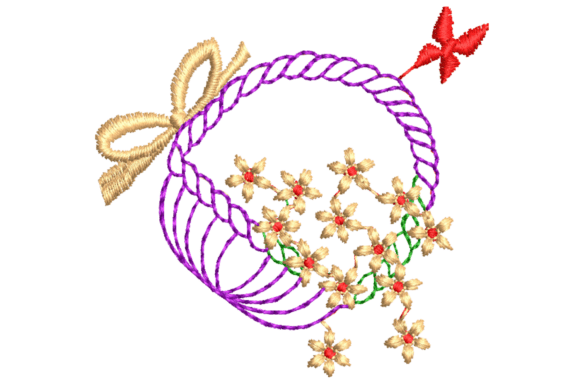
As an embroidery designer who’s developed and reviewed hundreds of machine embroidery designs for small business merch, my first impression of the Flower Basket Embroidery Design is one of quiet confidence. It reads as warm, approachable, and intentionally timeless—not trendy, not fussy, but deeply rooted in craft tradition. The phrase “charming arrangement of blooming flowers neatly placed in a decorative basket” signals balance, care, and visual harmony—qualities that translate directly into strong brand identity for cafés, florists, boutiques, bakeries, pet brands, and handmade studios. This isn’t just a floral motif; it’s a narrative device. It says “we tend to detail,” “we value natural beauty,” and “we’re grounded in authenticity.” That emotional resonance is rare—and valuable—in custom apparel and embroidered patch applications.
Where It Shines in Real Business Use
The Flower Basket Embroidery Design excels where small businesses need versatility without compromise. On staff aprons? It adds artisanal warmth without overwhelming function. On tote bags for a local florist or boutique? It becomes a subtle yet memorable signature—recognizable at a glance, elegant enough for repeat exposure. As a chest logo on work shirts or uniforms, its balanced composition avoids visual clutter while maintaining presence. For cap embroidery, it holds up beautifully when scaled to 2.5–3 inches wide—centered on the front panel, it reads clearly without distortion. As an embroidered patch sewn onto denim jackets or canvas satchels, it reinforces handmade product credibility. Even on product packaging accents—think stitched labels on linen tea bags or ceramic jar tags—the design lends tactile distinction that elevates perceived value.
Etsy sellers and craft-based brands will find this design especially effective in printable mockups and digital embroidery file bundles. Its classic structure pairs well with neutral palettes (ivory thread on navy twill, sage green on oat linen) and adapts seamlessly across fabric textures—from smooth poplin to nubby canvas. When used consistently across apron embroidery, tote bag design, and staff caps, the Flower Basket Embroidery Design builds visual consistency that strengthens customer trust and recognition over time.
Smart Placement & Practical Limits
Like any strong embroidery file, the Flower Basket Embroidery Design performs best when matched thoughtfully to application and material. Avoid using it below 1.75 inches wide for embroidered patches—delicate stems and basket weave details may lose definition. Cap embroidery on curved fronts demands careful digitizing; confirm the file includes optimized underlay and reduced stitch density in tight curves. On dark uniforms or textured fabrics like heavy duck cloth or fleece, test thread color contrast rigorously—light pastels may recede unless paired with matte or tonal threads. Also, avoid placing it directly over high-stress seams or areas subject to frequent washing (e.g., shirt cuffs or pocket flaps) unless the stitch density has been verified for durability.
How It Strengthens Your Brand Identity
In merchandising, every stitch communicates intention. The Flower Basket Embroidery Design supports a brand voice that’s nurturing, detail-oriented, and human-scaled—not corporate, not generic. Customers subconsciously associate its symmetry and organic flow with care and craftsmanship, which boosts perceived professionalism and product value. For handmade product lines, it acts as a visual shorthand: no slogan needed, just quiet authority. When repeated across touchpoints—aprons, caps, tote bags, even embroidered gift tags—it creates rhythm and cohesion, reinforcing brand recall without repetition fatigue. That consistency also simplifies client approvals and internal design reviews, since the core asset remains adaptable yet unmistakably yours.
Essential Designer Notes Before Production
Before launching your commercial embroidery project, run these practical checks:
- Test in black and white first—verify legibility and balance without color distraction.
- Check small patch size performance—scale down to 1.75” and inspect stem clarity and basket outline integrity.
- Review thread color contrast on your target fabric—especially critical for dark or textured materials.
- Inspect spacing between flower elements—tight clusters can cause thread nesting or fabric puckering if stabilizer isn’t matched properly.
- Confirm hoop size compatibility—ensure your embroidery file fits standard hoops used for caps, totes, or uniform panels.
- Test on real fabric with your intended stabilizer—different weights and weaves affect stitch lay and density perception.
- Create a printable mockup for client approval before stitching begins—this prevents costly rework.
- Compare beside other design assets—does it harmonize with your logo, typography, and existing embroidery files?
- Verify commercial licensing—confirm the digital embroidery file permits use on merchandise sold to end customers.
Remember: the strength of the Flower Basket Embroidery Design lies not just in its charm, but in how deliberately it’s applied. When aligned with your brand’s voice, production standards, and customer experience goals, it becomes more than decoration—it becomes part of your story.