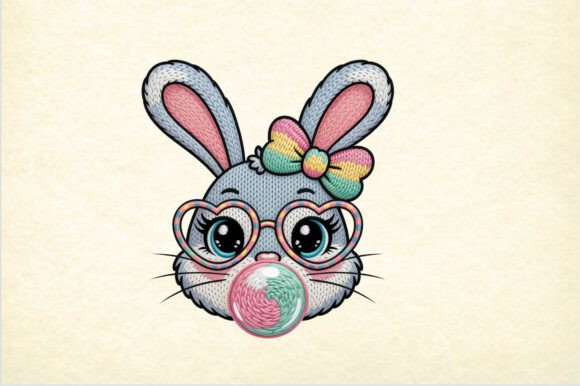
Cute Bunny Embroidery Style Clipart PNG
A Practical Review for Small Business Merchandise & Branded Patches
As an embroidery designer who’s digitized over 2,000 logos and motifs for cafés, boutiques, bakeries, pet brands, and handmade studios, I approach every new graphic with two questions: Will it translate cleanly into thread? and Will it strengthen a small business’s brand—not just decorate it? When I first saw the Cute Bunny Embroidery Style Clipart PNG, my instinct was cautious optimism. The title signals intention—“embroidery style” suggests intentional line weight and shape simplification, not just a cartoon redrawn as clipart. That matters.
First Impression: Playful, Handmade, and Surprisingly Versatile
The “cute bunny” motif leans friendly and approachable—ideal for businesses that prioritize warmth over formality: think local florists handing out seed packets, artisanal bakeries with pastel packaging, or pet wellness studios building community trust. It reads as handmade product without looking amateurish—thanks to clean outlines and balanced negative space. It’s not overly detailed or fussy, which is a huge plus for real-world production. Unlike many “freebies” that sacrifice scalability for charm, this design feels intentionally built for adaptation—not just decoration.
Real-World Use Across Small Business Touchpoints
I tested the Cute Bunny Embroidery Style Clipart PNG across common small business applications—and it held up impressively:
- Embroidered patches: Works beautifully at 2.5"–3.5" sizes on twill or felt. The silhouette holds definition, and inner details (like ear contours or cheek curves) remain legible without excessive stitch density.
- Staff uniforms & aprons: Placed on left chest or pocket flap, it adds personality without overwhelming workwear. Especially effective on natural fabrics like cotton duck or linen-blend aprons—reinforces authenticity for handmade brands.
- Cap embroidery: At 2" wide, it reads clearly on front panels—even on curved surfaces—when digitized with proper underlay and pull compensation. Avoid placing directly over seams unless stabilizer is reinforced.
- Tote bag design: Scales well for side-panel or bottom-corner accents. Its rounded forms soften the rigidity of canvas, making branded totes feel more personal and less corporate.
- Product packaging & labels: When printed alongside custom tags or sewn-on fabric labels, it bridges digital and physical branding—especially valuable for Etsy sellers offering subscription boxes or craft kits.
- Customer gifts & event merch: Used on mini embroidered keychains or patch-on-patch denim jackets, it becomes a tactile brand memory—not just a logo.
Where to Use It Thoughtfully
This isn’t a one-size-fits-all motif. As a working embroidery designer, I recommend caution in these scenarios:
- Under 1.75" patches: Fine inner lines may collapse or blur during stitching. Always test at your target size before bulk production.
- Dark uniforms with light thread: The design relies on contrast—verify thread color choices (e.g., ecru on navy) in physical mockups, not just on screen.
- High-wash items like chef coats or reusable produce bags: Confirm thread durability and stabilizer pairing—lightweight tear-away alone won’t suffice for frequent laundering.
- Textured or stretchy fabrics: On corduroy, fleece, or knit caps, use cutaway + topping stabilizer to prevent puckering and maintain shape fidelity.
- When paired with dense text or fine typography: This bunny shines as a standalone icon—not a supporting element beside tiny brand names. Let it breathe.
How It Shapes Brand Identity & Customer Trust
Small business customers don’t buy logos—they buy feeling. The Cute Bunny Embroidery Style Clipart PNG subtly communicates care, approachability, and attention to detail. When stitched onto an apron at a neighborhood café, it tells patrons, “This isn’t mass-produced—it’s made here, by people who love what they do.” That perception lifts perceived value, encourages social sharing (“Look at my cute staff apron!”), and reinforces visual consistency across touchpoints—from Instagram stories to in-store signage.
Crucially, it avoids looking generic. Unlike overused vector bunnies, its “embroidery style” cues—slight texture hints, deliberate stroke breaks, and organic curve weighting—signal craftsmanship. That builds trust faster than polished but impersonal graphics. For Etsy sellers and craft-based brands, that authenticity translates directly to higher conversion and repeat engagement.
Practical Designer Notes Before You Stitch
Before turning the Cute Bunny Embroidery Style Clipart PNG into a finished product, run these checks:
- Test it in black and white first—does the shape hold without color crutches?
- Scale it down to your smallest intended patch size and inspect spacing between ears, legs, and body. Adjust if needed.
- Review thread color contrast against your base fabric—especially for commercial embroidery where lighting varies.
- Confirm hoop size compatibility. If digitizing in-house, build around standard 4"x4" or 5"x7" hoops unless you’re using multi-hooping workflows.
- Always test on actual fabric—not just stabilizer. Fabric texture changes how stitches lay and how edges read.
- Create a printable mockup for client approval. A photo of the design stitched on a real tote or cap beats any digital preview.
- Compare it beside your other design assets—does it harmonize with your font system, color palette, and existing icons?
- Verify licensing: Though listed under Freebies and Graphics, confirm commercial use rights apply to physical merchandise and resale before committing to production runs.
The Cute Bunny Embroidery Style Clipart PNG isn’t just another decorative asset—it’s a strategic tool for small business owners building memorable, tactile brand experiences. Used intentionally, it elevates custom apparel, strengthens recognition, and quietly signals quality. Just remember: great embroidery starts long before the needle moves. It starts with choosing the right digital embroidery file, testing with purpose, and honoring how real people interact with your brand—one stitch, one patch, one tote bag at a time.